
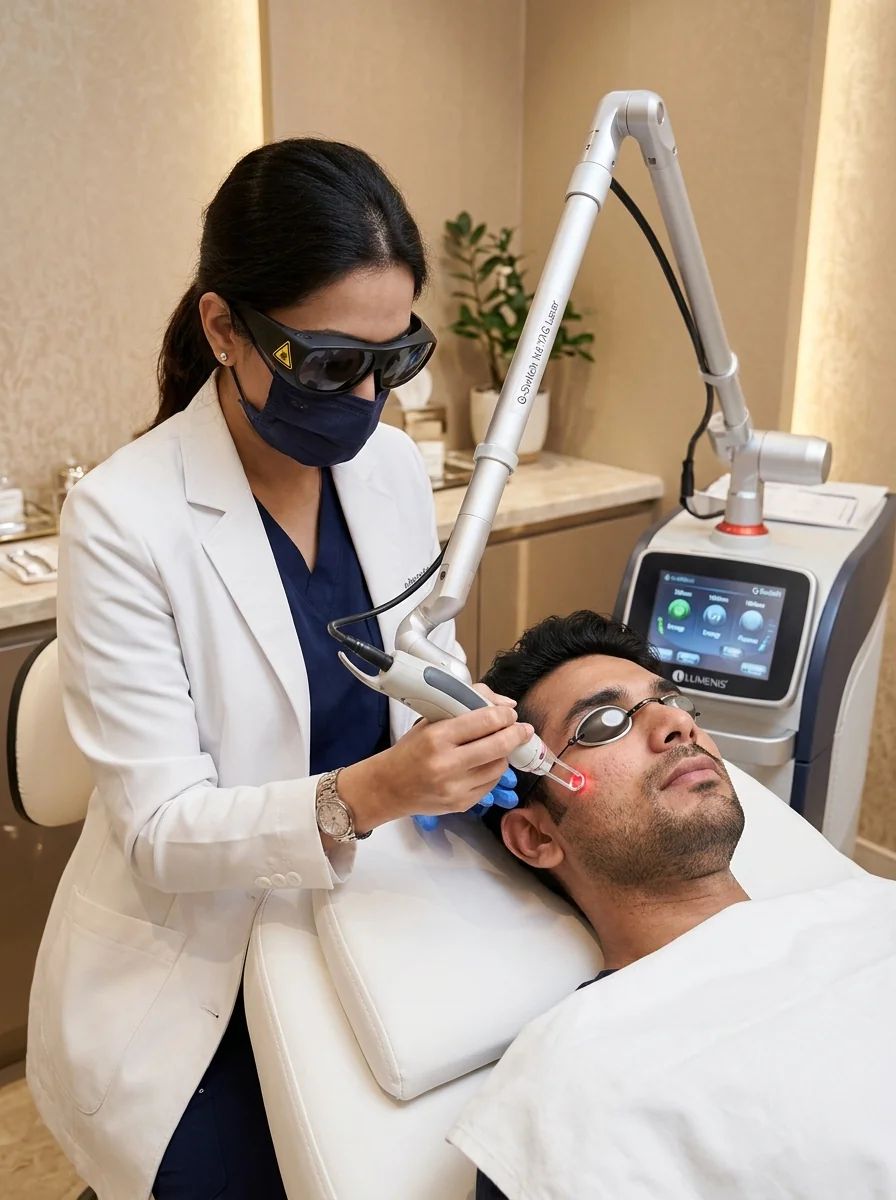
Understanding epidermal vs dermal pigmentation, why bleaching worsens melasma, and how low-fluence Q-Switch Nd:YAG clears stubborn melanin.
Clinical Differences Between Melasma and Sun Tanning
While both conditions involve excess melanin, their physiological root causes are vastly different. A sun tan is an epidermal defense response to UV exposure, causing widespread, even pigment deposition across exposed skin that resolves naturally with cellular turnover. Melasma, however, is a complex vascular and hormonal hyperpigmentation characterized by symmetrical, brownish-grey patches across the cheekbones, bridge of the nose, and forehead (the butterfly pattern). It involves hyperactive melanocytes dropping pigment into the deeper dermal layers.
The Danger of Bleaching Creams and Aggressive Salon Scrubs
Many patients in Mumbai and Thane mistakenly treat melasma like a stubborn suntan, using aggressive physical scrubs or over-the-counter steroid-loaded bleaching creams. Mechanical friction causes micro-inflammation that activates dermal melanocytes, while long-term steroid creams thin the skin barrier, trigger telangiectasia (visible capillaries), and cause severe rebound hyperpigmentation.
How Q-Switch Nd:YAG Laser Toning Clears Deep Pigment
The gold standard for stubborn dermal pigmentation is low-fluence Q-Switch Nd:YAG laser toning (1064nm wavelength). Unlike ablative lasers that burn surface skin, Q-Switch laser pulses last only nanoseconds. This generates a photo-acoustic shockwave that shatters deep melanin clusters into microscopic dust particles without heating the surrounding epidermis. Your body's lymphatic macrophage system then naturally absorbs and flushes away these fragmented particles.
Session Planning and Long-Term Stability
Because melasma melanocytes are biologically sensitized to UV light and heat, treatment must be gentle and progressive. Dr. Mahek plans 4 to 6 toning sessions spaced 2 to 3 weeks apart. Combining laser toning with topical tyrosinase inhibitors (tranexamic acid, azelaic acid, kojic acid) ensures new pigment synthesis remains suppressed.
Maintenance and Photoprotection in Mumbai Climate
Living in a humid tropical climate like Mumbai means UV index levels frequently exceed 8. Broad-spectrum SPF 50+ mineral sunscreen with PA++++ rating and blue-light protection is non-negotiable. Reapplication every 3 hours outdoors and wearing protective wide-brim hats preserves laser results and prevents melasma recurrence.
This guide is authored and clinically reviewed by Dr. Mahek Motwani (MBBS, DGO, DNB) strictly for patient health education and procedural transparency in alignment with National Medical Commission (NMC) ethical directives. Website content does not constitute self-diagnosis or replace an in-person medical evaluation. Individual clinical outcomes vary depending on biological factors, medical history, and aftercare adherence. Aesthetic procedures are administered only following an in-person consultation at our Mulund West clinic.
Questions About Q-Switch Laser & Pigmentation?
Schedule a 1-on-1 consultation with Dr. Mahek Motwani at our Mulund West clinic.