
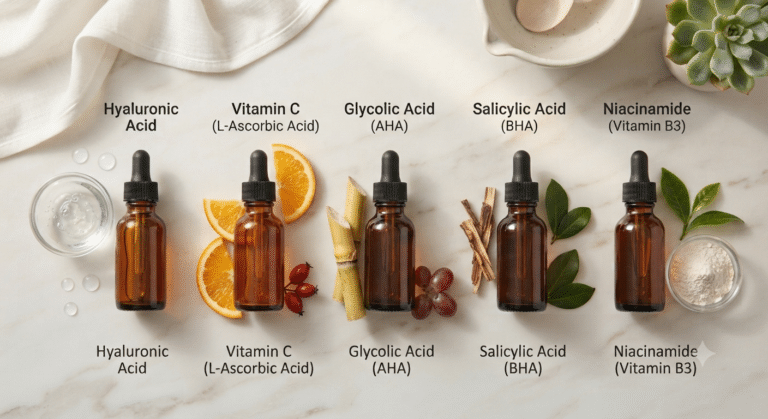
Topical acids serve diverse dermatological purposes, but improper selection can disrupt barrier integrity. Here is how active acids are categorized clinically.
Understanding Acids in Dermatology
Hyaluronic, salicylic, ascorbic, and glycolic acids each exhibit distinct physiological mechanisms. Choosing an unsuitable acid or over-exfoliating can destabilize the stratum corneum, making tailored selection essential.
Ascorbic Acid (Vitamin C)
L-ascorbic acid functions as a recognized biological antioxidant, scavenging free radicals generated by UV radiation and pollution while serving as an essential cofactor in natural collagen biosynthesis.
Salicylic Acid (BHA)
Because it is lipid-soluble, salicylic acid penetrates sebaceous follicles to dissolve cellular debris and sebum plugs. It is widely utilized in medical protocols for comedonal acne, congested pores, and post-inflammatory marks.
Hyaluronic Acid (Humectant)
Despite its chemical name, hyaluronic acid is a non-exfoliating glycosaminoglycan naturally occurring in skin connective tissue. It acts as a powerful humectant, drawing moisture into the epidermis to preserve skin turgor and hydration.
Glycolic, Lactic & Mandelic Acids (AHAs)
Glycolic acid features the smallest molecular size among AHAs for efficient epidermal exfoliation. Lactic acid is larger and provides dual exfoliation and moisturizing benefits, well-suited for sensitive skin. Mandelic acid penetrates slowly, offering gentle turnover for reactive skin types.
Targeted Actives: Azelaic, Kojic & Retinoids
Azelaic acid provides anti-inflammatory and tyrosinase-inhibiting properties beneficial in rosacea and post-inflammatory marks. Kojic acid aids in managing localized hyperpigmentation. Retinoic acid derivatives support epidermal maturation and collagen maintenance.
Questions About Chemical Peel?
Schedule a 1-on-1 consultation with Dr. Mahek Motwani at our Mulund West clinic.