Pigmentation & Melasma Management
Evidence-based dermatological care for melasma, post-inflammatory hyperpigmentation (PIH), sun spots, and dark patches on Indian skin types under the clinical direction of Dr. Mahek Motwani (25+ Years Clinical Expertise & Decade in Aesthetics).
Understanding Hyperpigmentation in Indian Skin
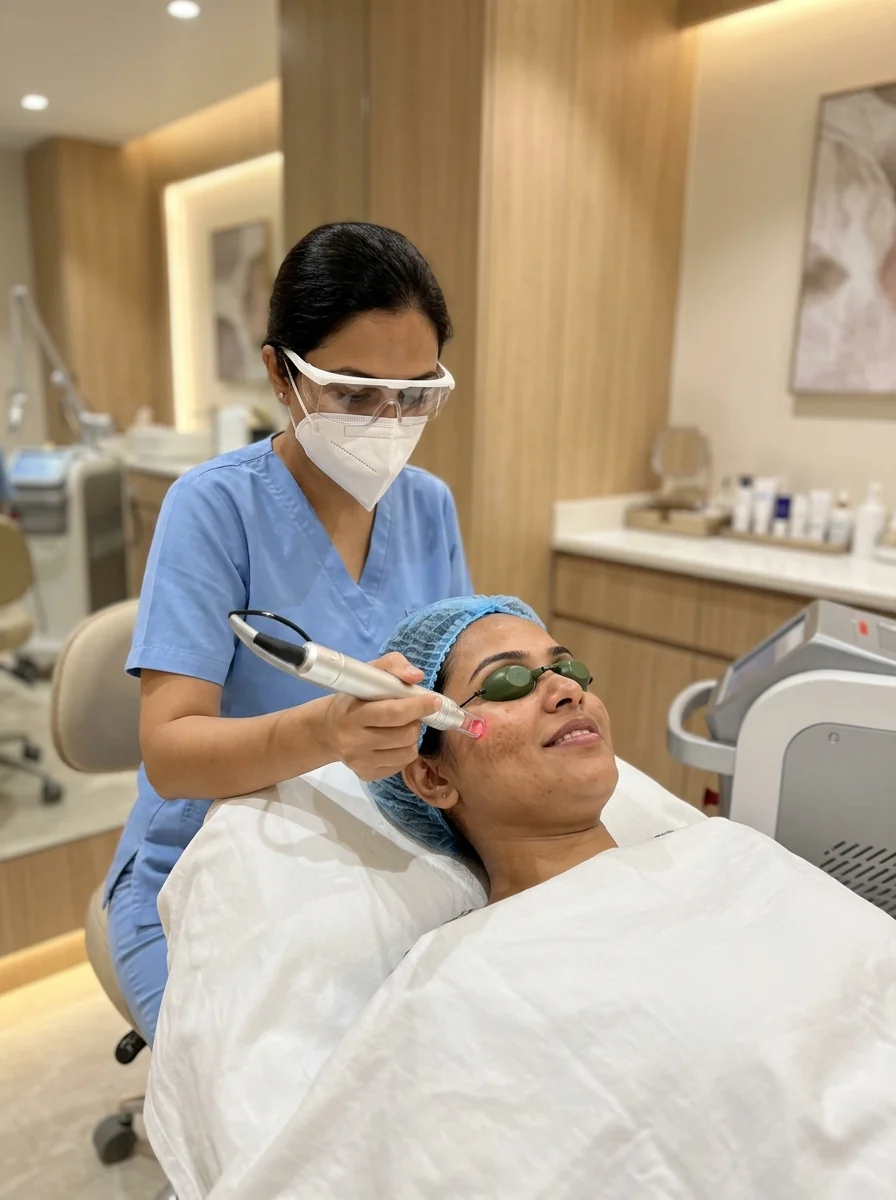
Dermal and epidermal melasma and stubborn pigmentation in Indian skin require low-fluence photo-acoustic laser toning (1064nm Q-Switched Nd:YAG) combined with targeted superficial chemical peels (mandelic, kojic, tranexamic acid). This protocol fragments melanosomes into microscopic particles for natural lymphatic clearance without thermal shock, preventing the rebound hyperpigmentation triggered by aggressive salon bleaching.
Hyperpigmentation is one of the most frequent dermatological concerns across Indian skin phototypes (Fitzpatrick III to V). Because Indian skin has active melanocytes that produce higher levels of protective melanin, any trigger such as ultraviolet radiation, hormonal shifts, friction, or inflammatory injury can prompt melanocytes into chronic overproduction.
Melasma typically presents as symmetrical brown or grey-brown patches across the cheeks, bridge of the nose, forehead, and upper lip. It often involves both epidermal and deeper dermal pigment layers. Post-inflammatory hyperpigmentation (PIH) arises after acne, eczema, or thermal trauma. Acanthosis nigricans presents as velvety hyperpigmentation around the neck and skin folds, often linked with metabolic factors.
Standard salon treatments and aggressive bleach solutions often aggravate pigmentation on Indian skin, triggering rebound darkening. At The Pinnk Door, Dr. Mahek Motwani conducts a clinical assessment using dermatoscopy to evaluate pigment depth before formulating a staged treatment protocol combining gentle laser toning, medical peels, barrier repair, and targeted topicals.
Conditions Managed at The Pinnk Door:
The Clinical Protocol for Pigmentation
Dermatological Mapping & Pigment Depth Check
Evaluation of pigment location (epidermal, dermal, or mixed) alongside hormonal factors, lifestyle, and UV exposure history to customize treatment parameters.
Preparation & Barrier Stabilization
Skin barrier health is stabilized with calming medical formulations before any active laser or peel procedure to prevent post-inflammatory flare-ups.
Low-Fluence Laser Toning & Targeted Peels
Sub-cellular Q-Switched Nd:YAG laser toning gently fragments melanin clusters, complemented by superficial brightening peels such as mandelic, lactic, and kojic formulations.
Medical Maintenance & Photoprotection
Ongoing care with prescription tyrosinase inhibitors and broad-spectrum mineral sunscreen with visible light protection to maintain skin clarity.
Key Aspects of Our Pigmentation Care
Calibrated for Indian Phototypes
Gentle, low-fluence protocols engineered specifically to avoid post-inflammatory rebound hyperpigmentation.
Multi-Layered Melanin Control
Addresses both surface epidermal pigment and deeper dermal deposits through combined laser and chemical modalities.
Even, Natural Radiance
Helps clarify blotchy discoloration, age spots, and chronic sun-induced darkening without harsh bleaching agents.
Strengthens Skin Barrier
Integrates barrier-repair hydrators and soothing botanicals to keep treated skin calm and resilient.
Zero Social Downtime
Gentle toning and light superficial peels allow you to resume daily activities immediately after each session.
Structured Progression
Regular dermatoscopic evaluations measure objective improvements in pigment density across your treatment cycle.
Pigmentation Protocols & Options
Laser Toning (Q-Switched Nd:YAG)
Low-fluence pigment fragmentation • 4 to 6 sessions
Medical Brightening Peel
Mandelic / Kojic / Lactic formulation • superficial
Comprehensive Melasma Protocol
Dual modality laser toning + targeted medical peels
Body Pigmentation / Acanthosis Protocol
Targeted flexural and neck area renewal course
Treatment selection depends on pigment depth, chronicity, and skin barrier resilience. Personalized multi-session treatment schedules are confirmed after clinical doctor consultation.
Book consultation for personalised planFrequently Asked Questions
Melasma is a chronic, relapsing condition influenced by genetics, hormones, and sunlight. While clinical treatments can significantly fade patches and restore uniform skin tone, ongoing maintenance, strict UV defense, and lifestyle management are necessary to prevent recurrence.
Schedule Your Assessment
Consult Dr. Mahek Motwani for personalized dermatoscopic pigment analysis and customized protocol planning.