
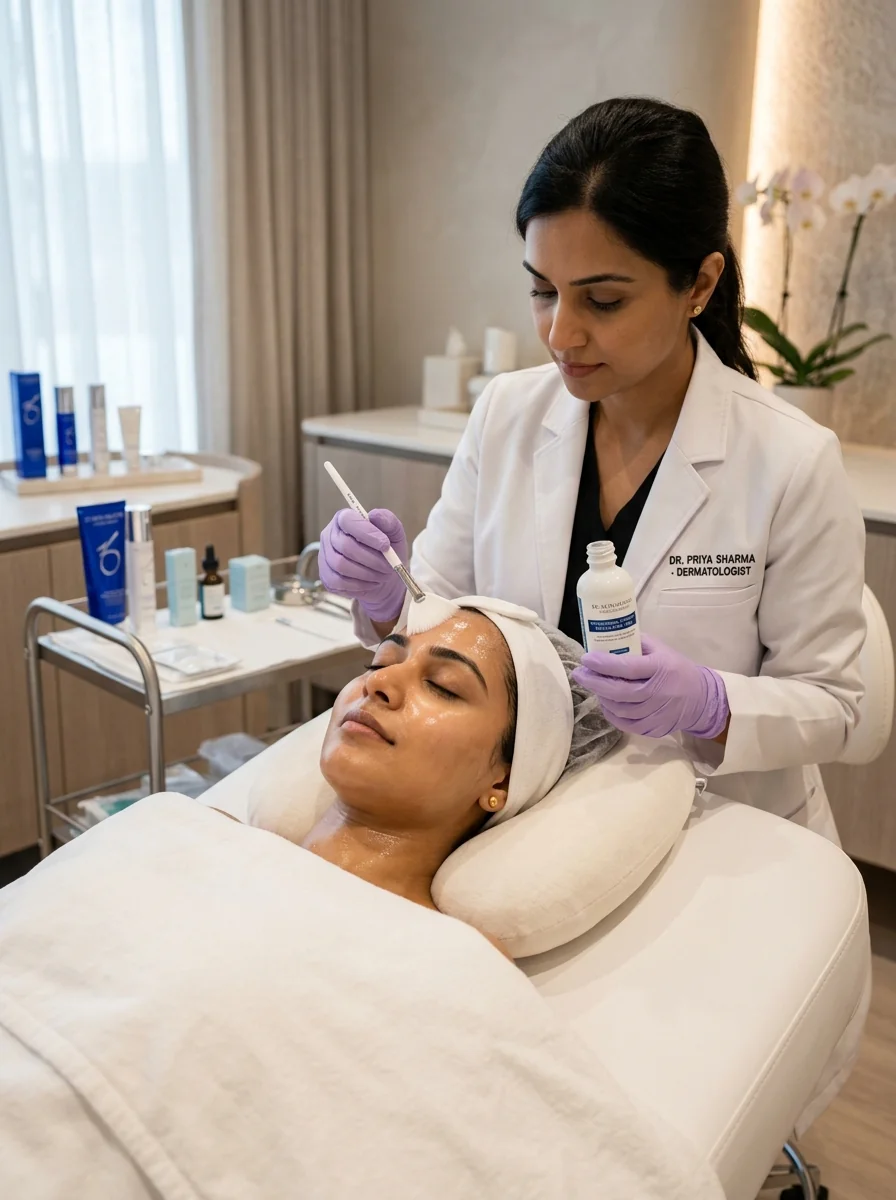
Comparing chemical exfoliation and vortex fluid extraction for acne, hyperpigmentation, and instant event radiance on Indian skin.
The Fundamental Distinction in Mechanism
While both chemical peels and Medical HydraFacial MD treatments rejuvenate the skin, they operate on different biological pathways. Chemical peels utilize calibrated organic acids (salicylic, glycolic, lactic, or mandelic) to chemically break the desmosomal bonds between dead stratum corneum cells, triggering controlled epidermal shedding. HydraFacial, conversely, relies on non-traumatic vortex fluid extraction that simultaneously vacuums out sebum plugs while bathing newly opened pores in multi-molecular hyaluronic acid and antioxidant serums.
Active Acne, Blackheads & Congested Pores
For patients presenting with active papules, pustules, and deep cystic inflammation, physician-calibrated salicylic acid peels are usually the first-line treatment. Salicylic acid is lipophilic (oil-soluble), allowing it to penetrate deep inside the sebaceous gland to reduce active acne bacteria and control sebum. HydraFacial MD, on the other hand, is unmatched for painless extraction of stubborn open comedones (blackheads) and closed comedones (whiteheads) without manual squeezing.
Post-Acne Marks (PIH) vs Instant Event Glow
If your primary concern is stubborn dark marks left after acne (post-inflammatory hyperpigmentation) or uneven skin tone, a series of superficial to medium chemical peels works by steadily accelerating cellular turnover to disperse melanin deposits. However, if you need an instant luminous glow before a wedding or party with zero flaking or redness, HydraFacial MD delivers immediate barrier plumping and glassy radiance with zero social downtime.
Safety Considerations for Indian Fitzpatrick Types III to V
Because Indian skin has active melanocytes, unmonitored high-strength salon peels carry a real risk of rebound hyperpigmentation. At The Pinnk Door in Mulund West, Dr. Mahek Motwani selects gentle mandelic, lactic, or buffered multi-acid cocktails calibrated strictly to the patient's skin phototype. Medical HydraFacial carries virtually zero risk of pigment rebound and is safe year-round.
Clinical Recommendation: Can They Be Combined?
In comprehensive aesthetic protocols, chemical peels and HydraFacials are often alternated. A common physician regimen starts with 2 to 3 clarifying peel sessions spaced 3 weeks apart to settle active breakouts and sebum production, followed by monthly maintenance HydraFacials to preserve pore clarity, barrier moisture, and radiant skin texture.
This guide is authored and clinically reviewed by Dr. Mahek Motwani (MBBS, DGO, DNB) strictly for patient health education and procedural transparency in alignment with National Medical Commission (NMC) ethical directives. Website content does not constitute self-diagnosis or replace an in-person medical evaluation. Individual clinical outcomes vary depending on biological factors, medical history, and aftercare adherence. Aesthetic procedures are administered only following an in-person consultation at our Mulund West clinic.
Questions About Chemical Peels & HydraFacial?
Schedule a 1-on-1 consultation with Dr. Mahek Motwani at our Mulund West clinic.